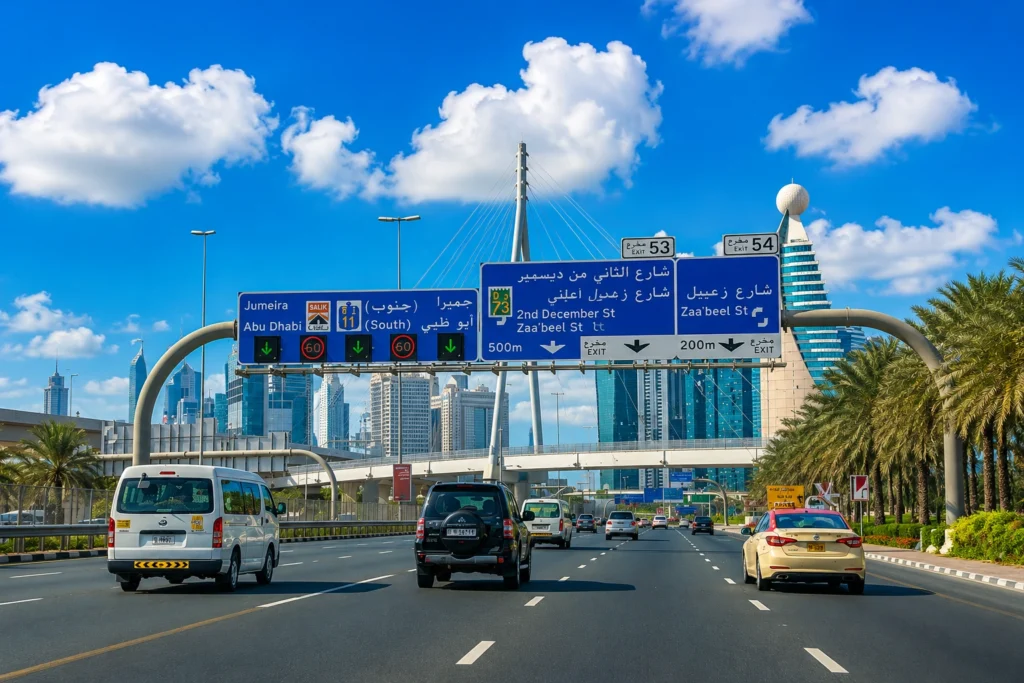

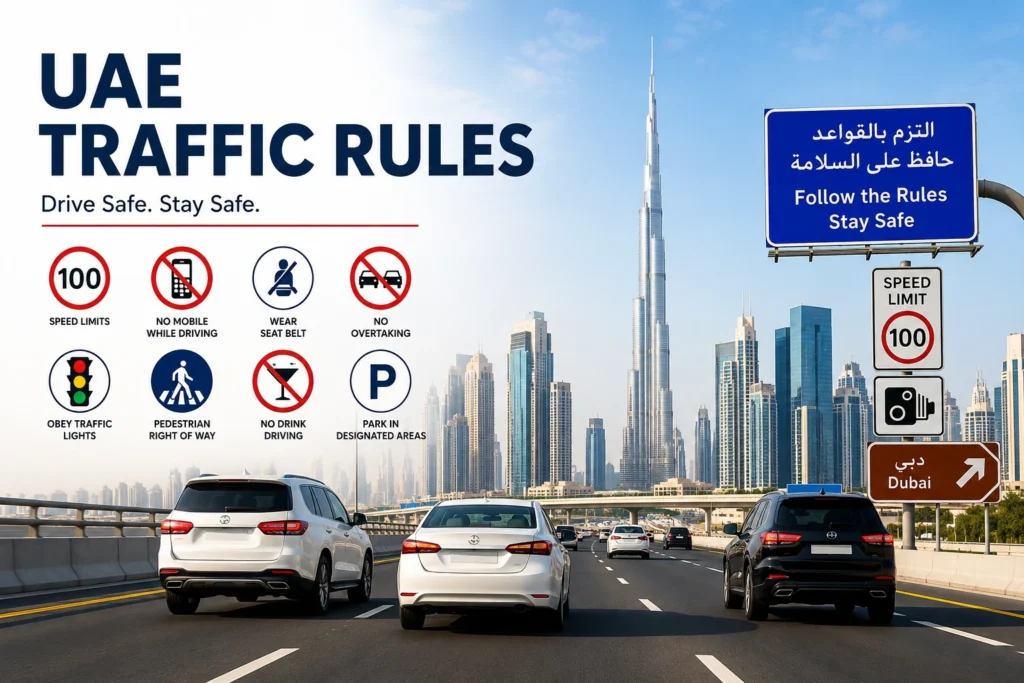
Whether you are a new resident, a tourist picking up a rental car or someone who has been driving in the UAE for years there is always something worth knowing about UAE traffic rules. The rules are clear, the enforcement is consistent and the consequences of getting them wrong can be expensive and sometimes serious. This guide covers everything you need to drive safely and legally across the UAE with confidence.
Why Understanding UAE Traffic Rules Matters
The UAE has one of the most advanced road networks in the world. The highways are wide, well lit, and well maintained. Traffic management systems are sophisticated, with speed cameras, red light cameras, tailgating detection systems, and mobile patrol units operating across the road network. Understanding traffic rules in UAE before you drive is not just about avoiding fines. It is about keeping yourself and everyone around you safe on roads that move fast and expect a high standard of driving. If you plan to rent a vehicle, knowing the minimum age to rent a car in Dubai is also important before you get behind the wheel.
Who This Guide Is For
This guide is relevant for anyone driving in the UAE whether you are a tourist who just picked up a rental car at the airport, a new expat settling into life in Dubai or a long term resident who wants to make sure they are fully up to date with the new traffic rules in UAE that have been introduced or updated in recent years. The rules covered here apply across all seven emirates including Dubai and Abu Dhabi.
UAE Traffic Rules and Regulations: The Fundamentals
Every driver on UAE roads needs to understand the core rules before they turn the ignition on. These are not optional guidelines. They are legal requirements that carry real consequences when broken.
Speed Limits Across the UAE
Speed limits in the UAE vary by road type and location. Residential areas typically have limits of 40 to 60 kilometres per hour. Urban roads sit between 60 and 80. Major highways including Sheikh Zayed Road in Dubai operate at limits of 100 to 120 kilometres per hour with some sections allowing up to 140 kilometres per hour where clearly posted. Most speed cameras in the UAE allow a tolerance of 20 kilometres per hour above the posted limit before a fine is issued but this tolerance is not a legal right and should never be relied upon as a driving strategy.
Seatbelts Are Mandatory for All Passengers
UAE driving regulations require every passenger in a vehicle to wear a seatbelt at all times regardless of where they are sitting. This includes rear seat passengers who are often overlooked in many other countries. Children under ten years old must sit in the back seat and children under four must be in an approved child seat. Drivers are responsible for ensuring all passengers comply and can be fined if any passenger is found without a seatbelt during a police stop.
Mobile Phone Use While Driving
Using a handheld mobile phone while driving is strictly prohibited under UAE traffic rules and regulations. This includes holding the phone to make a call, reading or sending messages and using apps while the vehicle is in motion. Hands free devices are permitted but even these are discouraged in the spirit of maintaining full attention on the road. The fines for mobile phone use while driving in the UAE are significant and the offence also carries black points on the driver’s licence.
Drink Driving Laws in the UAE
The UAE operates a zero tolerance policy on drink driving. Any detectable level of alcohol in the blood of a driver is a criminal offence. This applies to residents and tourists equally and the consequences include arrest, detention, licence suspension and potential deportation for non UAE nationals. There is no grey area on this rule and no acceptable level of alcohol consumption before driving anywhere in the UAE.
Dubai Traffic Rules: What Makes Dubai Specific
While the core UAE driving regulations apply across all emirates Dubai has its own specific enforcement environment that drivers should be aware of before they get on the road.
Salik Toll System
Dubai operates the Salik toll system which automatically charges drivers as they pass through designated toll gates on major roads. Every vehicle registered in Dubai has a Salik tag fitted and rental cars also have Salik tags installed. The charge per gate passage is four dirhams and is deducted automatically. For rental car drivers Salik charges are billed separately at the end of the rental period and are the responsibility of the renter. Understanding this before you pick up a family cars for rent in Dubai vehicle prevents surprise charges at the end of your rental.
Black Points System in Dubai
Dubai uses a black points system to track driving offences on individual licences. Different violations carry different numbers of black points and accumulating 24 points within a year results in the licence being suspended for three months. Serious offences carry higher point penalties and some violations trigger immediate licence confiscation by traffic police. Family cars for rent in Dubai drivers should be especially aware of this system because tourist and resident rental car drivers are subject to the same black points consequences as any other driver on Dubai roads.
Speed Camera Density in Dubai
Dubai has one of the highest densities of speed cameras of any city in the world. Fixed cameras, mobile cameras and average speed cameras that calculate your speed between two points are all active across the city. The average speed cameras in particular catch drivers who slow down for a known fixed camera and then speed up immediately after which is a habit that no longer works on roads with average speed monitoring in place.
Traffic Rules in Abu Dhabi: Key Differences
Traffic rules in Abu Dhabi follow the same national framework as Dubai but there are some notable local differences that drivers moving between the two emirates should be aware of.
Lower Speed Tolerances in Abu Dhabi
Abu Dhabi traffic cameras have historically operated with a lower tolerance than Dubai cameras before triggering a fine. Drivers who are accustomed to the Dubai tolerance and carry that habit into Abu Dhabi can find themselves receiving fines that they did not expect. Always check the posted speed limit and drive to that limit rather than relying on any assumed tolerance in either emirate.
Abu Dhabi Parking Regulations
Abu Dhabi has its own parking system and designated paid parking zones that work differently from Dubai. Make sure you understand the local parking rules in whatever area you are visiting to avoid parking fines that can add up quickly over a multi day stay in the capital.
New Traffic Rules in UAE: Recent Updates Worth Knowing
The UAE regularly updates its traffic regulations to improve road safety and respond to new driving patterns and technologies. Here are some of the most important new traffic rules in UAE that drivers should be aware of.
Tailgating Enforcement
Tailgating cameras are now active on UAE highways and automatically issue fines to drivers. Who follow too closely behind the vehicle in front of them. The UAE driving regulations require drivers to maintain a safe following distance at all times and the camera technology can now enforce. This automatically without a police officer needing to be present.
Tinted Window Regulations
Vehicles in the UAE must comply with specific tinted window regulations that limit the darkness of tint on windscreens and front side windows. Vehicles with illegal tint levels can be pulled over and fined. If you are picking up a luxury car rental in Dubai make sure the vehicle complies with tinting regulations before you drive it and flag any concerns to the rental company before you leave the collection point.
Driving Under Fatigue
UAE traffic rules now include provisions for driving under fatigue which is treated as a serious safety offence. If a police officer determines that a driver is showing signs of dangerous fatigue they have the authority to stop the driver from continuing until they have rested. Long distance driving across emirates without adequate breaks is specifically flagged as a risk behaviour under the updated regulations.
Car Insurance for Rental Cars and UAE Traffic Rules
Car insurance for rental cars in the UAE covers the legal minimum requirements for driving on UAE roads. But understanding what your specific policy covers in relation to traffic violations is important before you drive. Car insurance for rental cars does not cover fines, black points or the cost of traffic violations. Those remain the personal responsibility of the driver throughout the rental period. Always drive within the rules and keep your own record clean regardless of whether you are driving your own vehicle or a rental.
Minimum Age to Rent a Car in Dubai and Traffic Accountability
The minimum age to rent a car in Dubai is 21 for most standard vehicles. Young drivers who meet the minimum age to rent a car in Dubai are subject to exactly the same traffic rules and consequences as any other driver. Age does not provide any exemption from UAE traffic rules. And regulations and younger drivers should be particularly aware of the black points system. How quickly points can accumulate from seemingly minor violations.
Final Thoughts
Driving in the UAE is genuinely enjoyable when you know the rules and respect them consistently. The roads are excellent, the signage is clear and the enforcement is fair when you are driving properly. UAE traffic rules exist to keep everyone safe on roads that carry enormous volumes of fast moving traffic every single day. Whether you are driving a family cars for rent in Dubai vehicle for a holiday. A luxury car rental in Dubai for a business trip or your own car for the daily commute the rules are the same for everyone and following them consistently is the simplest and most effective way to have a great experience on UAE roads every single time you drive.
Frequently Asked Questions
What are the most important UAE traffic rules for first time drivers in the country?
Seatbelts for all passengers, zero alcohol tolerance, strict speed limit compliance and no mobile phone use. While driving are the four most important UAE traffic rules for anyone driving in the country for the first time. Getting these four right from day one removes the majority of risk for new drivers on UAE roads.
Are new traffic rules in UAE different from what they were a few years ago?
Yes the UAE regularly updates its traffic regulations and recent years have seen. The introduction of tailgating cameras, stricter fatigue driving provisions and updated tinted window rules. Staying current with new traffic rules in UAE is important for both residents and regular visitors to the country.
Does car insurance for rental cars cover traffic fines in the UAE?
No car insurance for rental cars does not cover traffic fines or black points accumulated during the rental period. These remain the personal financial and legal responsibility of the driver throughout. The rental and are billed separately from the rental agreement at the end of the hire period.
How does the minimum age to rent a car in Dubai relate to traffic rules?
The minimum age to rent a car in Dubai is 21 for most standard vehicles. And young drivers who qualify are subject to exactly the same UAE traffic rules and regulations as any other driver. No exemptions or special considerations apply to younger drivers and the black points system affects. Their licence record in exactly the same way as it affects older drivers.
Are traffic rules in Abu Dhabi different from Dubai traffic rules?
The core national framework is the same across both emirates. But Abu Dhabi has historically operated with lower speed camera tolerances than Dubai and has its own local parking regulations. Drivers moving between the two emirates should adjust their approach accordingly rather than assuming. The same tolerances apply in both locations.